
How to balance faith and career as a Christian is one of the most pressing questions believers face in today’s fast-paced, career-driven world. Many Christians feel torn between the demands of work and the call to live a godly, Spirit-led life. Is it possible to be successful at work and still grow spiritually? Absolutely, and here is how. The good news is that your faith and your career are not enemies. In fact, when properly aligned, your faith can become your greatest professional asset. God is not asking you to choose between Him and your career, He is asking you to bring Him into it. 1. Start Every Workday with God Before you open your laptop, check your emails, or head to the office, start your day with God. Spend at least 15-30 minutes in prayer and Bible reading. This is not just a religious ritual; it is a spiritual strategy. When you invite God into your day from the beginning, He orders your steps and gives you wisdom that no training or degree can provide. Proverbs 3:6 says, “In all your ways acknowledge Him, and He will make your paths straight.” Starting your day with God means acknowledging Him and He will take care of the rest. 2. Let Your Work Be an Act of Worship 10 ORDINARY PEOPLE WHO CHANGED THE WORLD THROUGH PERSEVERANCE https://pcainspires.com.ng/ordinary-people-who-changed-the-world-through-perseverance/ Colossians 3:23 says, “Whatever you do, work at it with all your heart, as working for the Lord, not for human masters.” This verse completely reframes how we see work. When you view your career as an act of worship, you stop separating Sunday faith from Monday work. Excellence, integrity, creativity, and diligence in your career become expressions of your faith. You are not just doing a job; you are representing the Kingdom of God in your workplace. 3. Guard Your Time and Set Boundaries One of the biggest threats to spiritual balance is overworking. Many Christians sacrifice their prayer time, church attendance, family time, and rest on the altar of career advancement. While ambition is not wrong, unchecked ambition can slowly erode your spiritual life. Set clear boundaries. Decide what hours you will work, what days are reserved for worship and rest, and what sacrifices you will not make no matter the professional pressure. Remember, God rested on the seventh day, not because He was tired, but to set an example for us. 4. Find a Faith Community and Stay Connected It is very difficult to maintain your faith in isolation, especially in a challenging work environment. Find a local church, a cell group, or a Christian colleagues’ fellowship and stay connected. Iron sharpens iron (Proverbs 27:17), and consistent fellowship keeps you accountable, encouraged, and spiritually strong. 5. Be a Light in Your Workplace https://www.bing.com/ck/a?!&&p=22e43979c61d0a0864013e2b355ed4714a2fe04e2e7abb9f9ad8d028f89a6687JmltdHM9MTc4NjY2NTYwMA&ptn=3&ver=2&hsh=4&fclid=2366de9e-d8c2-672b-1ff2-cbe9d9766668&u=a1L3ZpZGVvcy9yaXZlcnZpZXcvcmVsYXRlZHZpZGVvP3E9SE9XK1RPK0JBTEFOQ0UrRkFJVEgrQU5EK0NBUkVFUitBUytBK0NIUklTVElBTiZtaWQ9QkE0NzIyQUJEOTgwRDI4NkM2ODBCQTQ3MjJBQkQ5ODBEMjg2QzY4MCZjaHVybD1odHRwcyUzYSUyZiUyZnd3dy55b3V0dWJlLmNvbSUyZmNoYW5uZWwlMmZVQ2NMM245b2VrRGw0SjJxNWxBeHI5QVEmRk9STT1WSVJF Your workplace is your mission field. You do not have to preach at every staff meeting, but your character, your conduct, and your compassion should reflect Christ. Be the colleague who is honest when everyone else cuts corners. Be the one who encourages others when morale is low. Be known for your integrity. Matthew 5:16 says, “Let your light shine before others, that they may see your good deeds and glorify your Father in heaven.” Your career is an opportunity for evangelism through character. 6. Trust God with Your Career Advancement One of the most stressful things for a Christian professional is the fear of being left behind because they will not compromise their values. But Psalm 75:6-7 reminds us that promotion does not come from the east or the west, it comes from God. You do not need to compromise your faith to advance your career. Trust God to open doors that no man can shut and to close doors that would harm you. His promotions come with no sorrow added. BIOGRAPHY OF SINACH: NIGERIA’S GOSPEL QUEEN https://pcainspires.com.ng/biography-of-sinach-nigerias-gospel-queen/ 7. Practice Sabbath Rest God established the Sabbath as a gift, not a burden. Regular rest is not laziness, it is obedience and wisdom. Taking one day a week to rest, worship, and restore your soul actually makes you more productive, more creative, and more spiritually sensitive throughout the rest of the week. Thought. Balancing faith and career as a Christian is not about having a perfect schedule – it is about having the right priorities. When God is at the center of your professional life, everything else finds its proper place. You can be excellent in your career, rise to the top of your field, and still be a devoted follower of Jesus Christ. In fact, that combination is exactly what the world needs to see. Related Posts You Will Love: → 5 Daily Habits of Spiritually Strong People → 7 Bible Verses For When You Feel Like Giving Up → I Almost Gave Up But God Showed Up – A Real Testimony
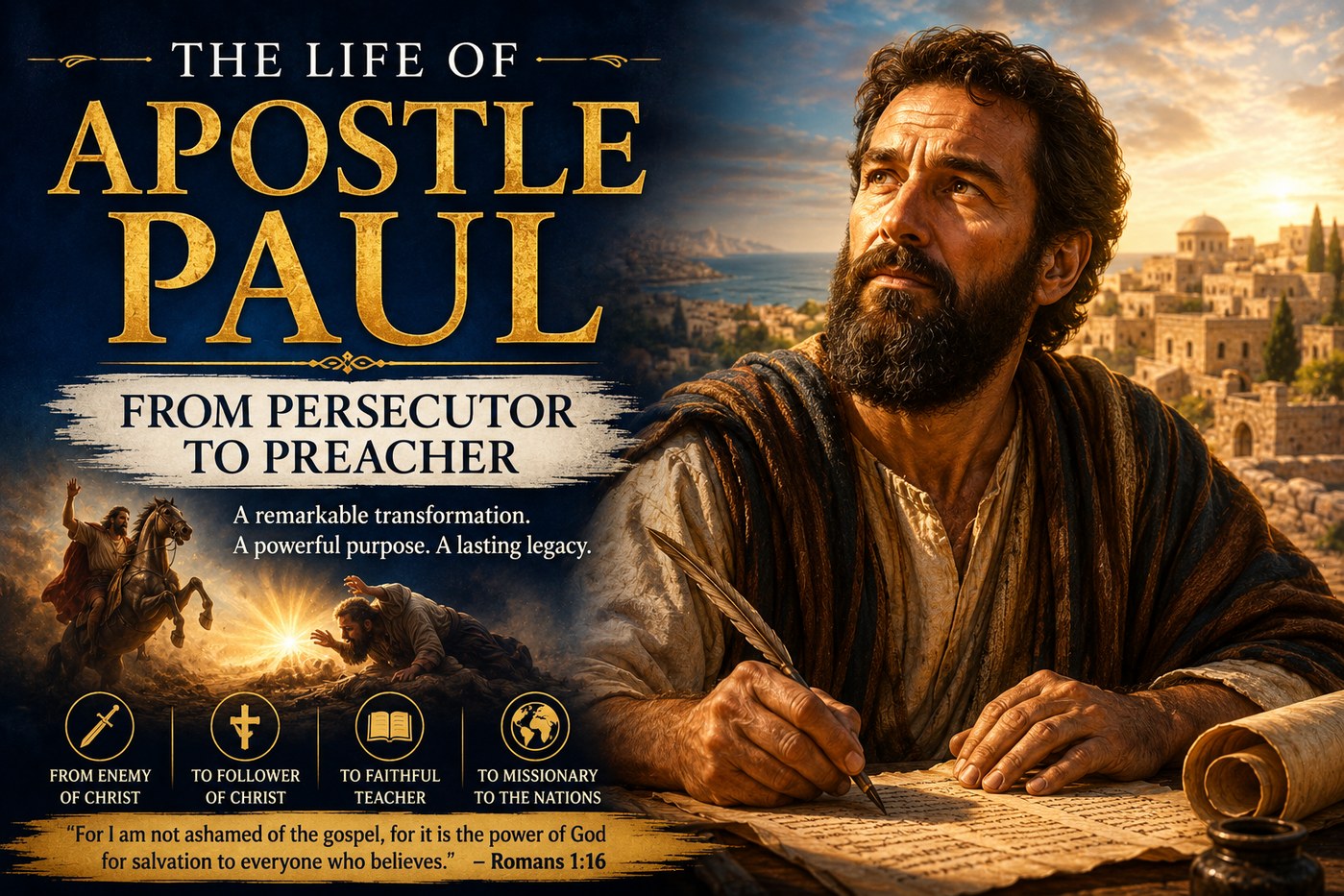
THE LIFE OF APOSTLE PAUL: FROM PERSECUTOR TO PREACHER
The life of Apostle Paul is one of the most dramatic and inspiring transformation stories in all of Scripture. Here was a man who once breathed threats and murder against the followers of Jesus Christ and yet became the very man who would write most of the New Testament and spread the gospel across the known world. If you have ever felt too far gone for God to use you, the story of Paul is your answer. His life proves that no one is beyond the reach of God’s grace. Who Was Paul Before His Conversion? Paul was born Saul of Tarsus, in what is now modern-day Turkey. He was a Roman citizen, a Hebrew of Hebrews, and a Pharisee, one of the most educated and religiously devoted men of his time. He studied under the great teacher Gamaliel in Jerusalem (Acts 22:3). https://www.bing.com/ck/a?!&&p=1225d0b602afb773268b8e65c8984a0e9490441a5424da4e2c57c74df846bf85JmltdHM9MTc4NjY2NTYwMA&ptn=3&ver=2&hsh=4&fclid=2366de9e-d8c2-672b-1ff2-cbe9d9766668&u=a1L3ZpZGVvcy9yaXZlcnZpZXcvcmVsYXRlZHZpZGVvP3E9VEhFK0xJRkUrT0YrQVBPU1RMRStQQVVMJTNhK0ZST00rUEVSU0VDVVRPUitUTytQUkVBQ0hFUiZtaWQ9MDNDMEJEMEREQjlEOUVFNjMwRjUwM0MwQkQwRERCOUQ5RUU2MzBGNSZjaHVybD1odHRwcyUzYSUyZiUyZnd3dy55b3V0dWJlLmNvbSUyZmNoYW5uZWwlMmZVQ2xEOWJaTkE5ZGw3WkwtQmN0M0hSTFEmRk9STT1WSVJF Saul was passionate about his Jewish faith, and he saw the followers of Jesus as dangerous heretics who needed to be stopped. He approved of the stoning of Stephen, the first Christian martyr, and actively pursued Christians to imprison and even kill them (Acts 8:1-3). The Damascus Road Encounter Everything changed on the road to Damascus. Saul was on his way to arrest more Christians when suddenly a blinding light from heaven surrounded him. He fell to the ground and heard a voice saying: “Saul, Saul, why do you persecute me?” (Acts 9:4). When Saul asked who was speaking, the answer came: “I am Jesus, whom you are persecuting.” In that single moment, the greatest persecutor of the church became its greatest champion. Saul was blinded for three days, fasted, and prayed until God sent a man named Ananias to restore his sight and baptize him. The Transformation of Paul After his conversion, Saul now known as Paul did not waste a moment. He immediately began preaching in the synagogues that Jesus is the Son of God (Acts 9:20). People were astonished. This was the same man who had been arresting Christians just days before. Paul spent time in Arabia for three years, where God prepared and equipped him for ministry. When he returned, he was a different man, fully surrendered to Christ and ready to fulfill his divine assignment. Paul’s Missionary Journeys Paul undertook three major missionary journeys, traveling thousands of miles by foot, boat, and on horseback across Asia Minor, Greece, and eventually to Rome. He planted churches in cities like Ephesus, Corinth, Philippi, Thessalonica, and Galatia. Everywhere Paul went, he preached the same message; salvation through faith in Jesus Christ alone. He performed miracles, cast out demons, and raised the dead. But he also faced incredible oppositions; he was beaten, stoned, imprisoned, shipwrecked, and left for dead multiple times. Paul’s Letters – Our Inheritance One of Paul’s greatest contributions to the faith is his letters. Thirteen of the twenty-seven books of the New Testament are attributed to Paul, including Romans, Corinthians, Galatians, Ephesians, Philippians, Colossians, and more. These letters contain some of the deepest theological truths ever written and continue to transform lives thousands of years later. Paul’s Death and Legacy Paul was eventually arrested and taken to Rome, where he was imprisoned. Tradition holds that he was martyred under the Roman Emperor Nero around 67 AD, dying for the very faith he once tried to destroy. Yet his death was not the end – his letters and his example continue to preach to billions. Lessons from the Life of Apostle Paul 1. No one is too far gone for God. Paul went from murderer to missionary. 2. An encounter with Jesus changes everything. One moment with God can redirect your entire life. 3. Suffering does not mean failure. Paul suffered greatly yet never stopped serving God. 4. Your past does not define your future. Paul’s worst days became his greatest testimony. Thought. The life of Apostle Paul from persecutor to preacher is a timeless reminder that God specializes in transformation. Whatever your past looks like, whatever mistakes you have made, God can turn it all around for His glory. Just like Paul, your greatest chapter may still be ahead of you. Surrender to Jesus today and let Him write your story. Related Posts You Will Love: → Biography of Sinach – Nigeria’s Gospel Queen https://pcainspires.com.ng/biography-of-sinach-nigerias-gospel-queen/ → 7 Bible Verses For When You Feel Like Giving Up → How to Stay Strong in Faith During Hard Times

TOP 10 NIGERIAN GOSPEL SONGS FOR PRAYER TIME
Top 10 Nigerian Gospel Songs for Prayer Time is your ultimate playlist guide for anyone who wants to create a powerful atmosphere of worship and intercession. Songs that set your spirit in tune to heaven, when you worship before tabling your request, your heaven is open, the Spirit of God abides in such atmosphere, even before you start praying. Nigerian gospel music carries a unique anointing that touches the soul and ushers you into God’s presence like nothing else. Whether you are praying in the morning, going through a difficult season, or simply wanting to worship God, these songs will set the perfect atmosphere for your prayer time and also lift your Spirit. 1. Way Maker – Sinach “Way Maker” by Sinach is one of the most powerful prayer songs of our generation. With lyrics declaring that God is a miracle worker, promise keeper, and light in the darkness, this song reminds us of who God is when we pray. Let it fill your prayer space. 2. Na You Dey Reign – Frank Edwards Frank Edwards is known for his energetic and anointed gospel music. “Na You Dey Reign” is a song of pure worship that declares the Lordship of Jesus Christ. Perfect for starting your prayer time with praise. 3. I Know Who I Am – Sinach This song by Sinach is a powerful declaration of identity in Christ. When you pray, knowing who you are in God makes all the difference. Let this song anchor your prayers in confidence. 4. I Lift My Hands – Nathaniel Bassey https://www.bing.com/ck/a?!&&p=630d9e285d45327205bbf7de093a1d1507620d8b912f2e7f322c4ff61674bbb7JmltdHM9MTc4NjY2NTYwMA&ptn=3&ver=2&hsh=4&fclid=2366de9e-d8c2-672b-1ff2-cbe9d9766668&psq=TOP+NIGERIAN+SONGS+FOR+PRAYER+TIME&u=a1aHR0cHM6Ly93d3cubGVnaXQubmcvYXNrLWxlZ2l0LzE1MTkxODEtcG93ZXJmdWwtd29yc2hpcC1zb25ncy1uaWdlcmlhLTIwLWdvc3BlbC10cmFja3MtcHJheWVyLw Nathaniel Bassey is one of Nigeria’s finest worship leaders. “I Lift My Hands” is a gentle, intimate worship song that creates a beautiful atmosphere for quiet prayer and communion with God. 5. Onise Iyanu – Nathaniel Bassey “Onise Iyanu,” meaning “Miracle Worker” in Yoruba, is a song that builds faith as you pray. When you feel like your miracle is delayed, let this song remind you that God is still working. 6. E Dey Do Am – Dunsin Oyekan Dunsin Oyekan is known for deep, prophetic worship. “E Dey Do Am” is a song of testimony and faith that God is actively working in your situation. Great for intercession. 7. You Are Yahweh – Mike Abdul This song by Mike Abdul is a powerful declaration of God’s name and character. As you call on the name of Yahweh in prayer, let this song lead the way. 8. Counting My Blessings – Tope Alabi Tope Alabi is a legend in Nigerian gospel music. “Counting My Blessings” is a song of gratitude and thanksgiving, a perfect way to begin your prayer by acknowledging what God has already done. 9. Alpha and Omega – Lionel Peterson / Nigerian Version This timeless classic has become a staple in Nigerian church worship. Its declaration of God as the beginning and the end makes it a powerful prayer companion. 10. Jesus You Are – Mercy Chinwo Mercy Chinwo brings deep emotion and anointing to this song. “Jesus You Are” is a beautiful surrender prayer song that invites God’s presence and prepares your heart for deep prayer. How to Use These Songs in Prayer Start with 2-3 praise songs to enter God’s presence. Move into worship songs for deeper communion. Use quieter songs for intercession and listening. End with a song of thanksgiving. Thought. These top 10 Nigerian gospel songs for prayer time are more than just music, they are tools for spiritual warfare, worship, and connection with God. Save this playlist and make it part of your daily prayer routine. Remember, where worship goes, God shows up. Related Posts You Will Love: → Biography of Sinach – Nigeria’s Gospel Queen https://pcainspires.com.ng/biography-of-sinach-nigerias-gospel-queen/ → How Gospel Music Brings Healing to the Soul → How to Build a Strong Prayer Life as a Christian

BIOGRAPHY OF SINACH: NIGERIA’S GOSPEL QUEEN
Biography of Sinach begins with a story of faith, resilience, and a burning passion to worship God that would eventually take her from the streets of Nigeria to stages across the world. Early Life and Background Sinach, whose full name is Osinachi Kalu Okoro Egbu, known professionally as Sinach, she hails from Ebonyi State, Eastern Nigeria, and she is the second daughter of seven children. Sinach started singing for family and friends in 1989 as a hobby, while working as a staff and choir member in Christ Embassy, Pastor Chris Oyakhilome’s church. she is one of the most celebrated gospel artists in Africa and beyond. Born on March 30, 1972, in Nigeria, Sinach grew up in a family that loved God. From an early age, she developed a deep love for music and worship. She studied Physics and graduated from the University of Port Harcourt, Rivers State, Nigeria. Growing up, Sinach was not always in the spotlight. She served faithfully behind the scenes, trusting God for His timing. Her journey teaches us that faithfulness in the small things is what God uses to prepare us for great things. Rise to Ministry Sinach joined Christ Embassy, the ministry of Pastor Chris Oyakhilome, and served diligently as a worship leader. It was in this season that God began to elevate her gifts. Her anointed voice and heartfelt worship drew thousands closer to God every time she ministered. For many years, she was content to serve in the background, leading worship and writing songs that blessed the congregation. Little did she know that God was preparing her for a global platform. The Song That Changed Everything In 2015, Sinach released “Way Maker,” a simple but powerful song born out of a moment of worship. The song quickly spread across Nigeria and then across the world. It has since been translated into dozens of languages and sung in churches across every continent. “Way Maker” became a global anthem during the COVID-19 pandemic, when millions of people around the world were searching for hope. The song’s message, that God makes a way even when there seems to be no way, brought comfort to countless souls. Awards and Recognition BIOGRAPHY OF PASTOR CHUKWUEMEKA CYRIL OHANAEMERE https://pcainspires.com.ng/biography-of-pastor-chukwuemeka-cyril-ohanaemere/ Sinach has received numerous awards and recognitions for her contribution to gospel music. She was the first African artist to top the Billboard Christian charts with “Way Maker.” She has won multiple Dove Awards, LIMA Awards, and has been recognized by music bodies around the world. Marriage and Family Sinach is married to Pastor Joseph Egbu, and together they lead Sinach World, a ministry dedicated to spreading the gospel through music. She is also a mother and a woman of faith who continues to inspire millions with her testimony. Lessons from Sinach’s Life https://www.bing.com/ck/a?!&&p=d244e4dd05cbf68513ca0cdc91c9be6bd0c9415940a23ba50b0ac95e0ab7ffacJmltdHM9MTc4NjY2NTYwMA&ptn=3&ver=2&hsh=4&fclid=2366de9e-d8c2-672b-1ff2-cbe9d9766668&psq=biography+os+sinach&u=a1aHR0cHM6Ly93d3cuc3Bpcml0cmV2ZWFsaW5nLm9yZy5uZy8yMDI1LzA2L2Jpb2dyYXBoeS1vZi1zaW5hY2gtb3NpbmFjaGlrYWx1b2tvcm9lZy5odG1s 1. Faithfulness opens doors. Sinach served for years before becoming globally known. 2. God’s timing is perfect. Her breakthrough came at the right moment. 3. Worship is a weapon. Her music has broken chains and brought healing. 4. Stay humble. Despite her fame, Sinach remains grounded in her faith. Conclusion The biography of Sinach is more than just a music career – it is a testament to what God can do with a willing heart. From Lagos to the world, her story reminds us that when you put God first, He will lift you higher than you could ever imagine. If you are going through a difficult season, let the story of Sinach encourage you – your Way Maker is working on your behalf! Related Posts You Will Love: → Top 10 Nigerian Gospel Songs For Prayer Time https://pcainspires.com.ng/top-10-nigerian-gospel-songs-for-prayer-time/ → How Gospel Music Changed My Life → Biography of Apostle Paul – From Persecutor to Preacher

10 ORDINARY PEOPLE WHO CHANGED THE WORLD THROUGH PERSEVERANCE
Your Ordinary Life Can Have an Extraordinary Impact 10 ordinary people who changed the world through perseverance; Have you ever looked at a great leader, inventor, or world-changer and thought, ‘They were just built differently’? The truth might surprise you. Most of the men and women who altered the course of history were not born into greatness. They were ordinary people, people who faced rejection, poverty, disability, and failure -who simply refused to quit. In this inspiring blog post, we explore 10 real stories of perseverance that prove one timeless truth: it is not your starting point that determines your destiny, but your willingness to keep going. HOW LIFE’S HARDEST MOMENTS SHAPE OUR GREATEST VICTORIES | INSPIRATIONAL LIFE LESSONS https://pcainspires.com.ng/how-lifes-hardest-moments-shape-our-greatest-victories-inspirational-life-lessons/ 10 PERSEVERANCE STORIES AT A GLANCE NAME BACKGROUND KEY ACHEIVEMENT Nick Vujicic Born without limbs Global motivational speaker Oprah Winfrey Abused & impoverished child Media billionaire & philanthropist Thomas Edison Called ‘too stupid to learn’ Invented the lightbulb J.K. Rowling Single mother on welfare Best-selling author in history Abraham Lincoln Failed 8 elections 16th U.S. President Bethany Hamilton Lost arm in shark attack Professional surfer Albert Einstein Couldn’t speak until age4 Nobel Prize winner Wilma Rudolph Paralyzed child Fastest woman in the world Steve Jobs Fired from own company Co-founded Apple, changed tech Fanny Crosby Blind from infancy Wrote 9,000+ hymns The Stories 1. Nick Vujicic: The Man With No Limbs, No Limits Nick Vujicic, born in the year 1982. As a child growing up in Melbourne, Australia, he faced relentless bullying, deep depression, and attempted to take his own life at just 10 years old. He could not understand why God had allowed him to come into the world in such a condition. But Nick chose perseverance over bitterness. He completed a double degree in financial planning and accounting, learned to surf, paint, play golf, and swim. Today, he travels the world speaking to millions of people across 70+ countries, and is the founder of Life Without Limbs, an international non-profit organization. “My strength and my hope are not in my circumstances, but in Jesus Christ.”-Nick Vujicic 2. Oprah Winfrey born in the year 1954. Oprah Winfrey was born into extreme poverty in rural Mississippi. She was raised by a single teenage mother, experienced sexual abuse at age 9, gave birth to a premature baby at 14 (who died shortly after), and was told by early career producers that she was ‘unfit for television.’ She persevered. She launched The Oprah Winfrey Show in 1986 and it became the highest-rated talk show in American television history, running for 25 years. Today, Oprah is worth over $2.5 billion and has used her platform to transform millions of lives through education, media, and philanthropy. 3. Thomas Edison born in the year 1847–1931. Thomas Edison was told by his teachers that he was ‘too stupid to learn anything.’ He was fired from his first two jobs for being unproductive. When he set out to invent the electric lightbulb, he reportedly failed over 10,000 times before succeeding. Rather than calling these attempts failures, Edison is famously quoted as saying: ‘I have not failed 10,000 times. I have successfully found 10,000 ways that will not work.’ His lightbulb invention in 1879 forever changed human civilization, and he holds over 1,000 patents to his name. 15 Ways to Control Your Emotions: The Complete Science-Backed Guide https://pcainspires.com.ng/15-ways-to-control-your-emotions-the-complete-science-backed-guide/ 4. J.K. Rowling born in the year, 1965, in England. Before Harry Potter became a global phenomenon, J.K. Rowling was a single mother living on government welfare benefits in Edinburgh, Scotland. She was clinically depressed, recently divorced, and struggling to care for her infant daughter. She described herself as ‘the biggest failure I knew.’ She wrote the first Harry Potter manuscript in cafes during her daughter’s naps, and the book was rejected by 12 different publishers before Bloomsbury finally accepted it in 1997. Today, the Harry Potter series has sold over 500 million copies worldwide, been translated into 80 languages, and spawned one of the highest-grossing film franchises in history. 5. Abraham Lincoln born in the year, 1809–1865. Abraham Lincoln’s life story is a textbook definition of perseverance. He was born into poverty, lost his mother at age 9, failed in business twice, suffered a nervous breakdown, and lost eight different political elections, including races for the state legislature, Congress, and the U.S. Senate, before finally being elected as the 16th President of the United States in 1860. During his presidency, he led the nation through the American Civil War and signed the Emancipation Proclamation in 1863, which abolished slavery in the Confederate states. He is widely regarded as one of the greatest presidents in American history. 6. Bethany Hamilton, born in the year 1990, Hawaii, USA. On October 31, 2003, 13-year-old surfing prodigy Bethany Hamilton was attacked by a 14-foot tiger shark while surfing off the coast of Hawaii. The attack severed her left arm. Doctors were unsure she would survive. She lost 60% of her blood. But Bethany had a dream and a faith that was stronger than her tragedy. Just one month after the attack, she was back in the water. By 2005, she had won her first national surfing title. She went on to compete professionally on the World Surf League, place top rankings in international competitions, and inspire millions through her best-selling memoir and the Hollywood film Soul Surfer (2011). “Courage doesn’t mean you don’t get afraid. Courage means you don’t let fear stop you.” – Bethany Hamilton 7. Albert Einstein, born in the year 1879–1955, Germany/USA. Albert Einstein did not speak until he was 4 years old and could not read until age 7. His teachers described him as ‘mentally slow, unsociable, and adrift forever in foolish dreams.’ He failed his university entrance exam on the first attempt. He was rejected for a teaching position and could not find an academic job, eventually taking a clerk position at a patent office. From that patent office, Einstein developed the Theory of Special Relativity

HOW TO STUDY THE BIBLE WITHOUT GETTING OVERWHELMED
A Complete Beginner’s Guide for Christians How to study the bible without getting overwhelmed. Have you ever sat down with your Bible, opened it to a random page, and felt completely lost? Maybe the language felt old-fashioned, or you did not know where to start, or you read a passage and had no idea what it meant for your life today. If that sounds familiar, you are not alone and more importantly, you are not failing as a Christian. The truth is, no one is born knowing how to study the Bible. It is a skill, one that can be learned, step by step, by any believer who is willing to try. The problem is not your intelligence or your faith. The problem is that most of us were never actually taught how to approach Scripture. https://www.bing.com/ck/a?!&&p=ae6d4dbc3c13bb7e78dc9aac453c3ccfc3ae2862b47b1a3233f7c7ac24a26dfbJmltdHM9MTc4Mjg2NDAwMA&ptn=3&ver=2&hsh=4&fclid=2366de9e-d8c2-672b-1ff2-cbe9d9766668&psq=HOW+TO+STUDY+THE+BIBLE&u=a1aHR0cHM6Ly9iaWJsZW1heGltdW0uY29tL2hvdy10by1zdHVkeS10aGUtYmlibGU This guide exists to change that. By the time you finish reading, you will have a clear, practical method for studying the Bible in a way that makes sense, feeds your spirit, and actually fits into your everyday life. Your word is a lamp to my feet and a light to my path- Psalm 119:105 (NKJV) Why So Many Christians Struggle to Study the Bible Before we jump into the how, it helps to understand the why. Why do so many sincere, faith-filled believers find Bible study difficult? There are a few common reasons: 1. They do not know where to start. With 66 books, 1,189 chapters, and two major testaments, the Bible can feel like a mountain. Starting from Genesis and powering through Leviticus often kills momentum fast. 2. They read without a method. Reading the Bible and Studying the Bible are different things. Simply reading without a plan or purpose can leave you feeling like nothing is sticking. 3. They feel they need to understand everything at once. The pressure to “get it all” can paralyze you before you even begin. Bible study is a lifelong journey, not a one-time exam. 4. Life is busy. Between work, family, church responsibilities, and the demands of daily life, finding consistent time and energy for deep Bible study can feel impossible. BIBLE VERSES FOR EVERY SEASON OF LIFE, EXPLAINED https://pcainspires.com.ng/bible-verses-for-every-season-of-life-explained/ Encouragement for You God does not expect you to be a theologian. He simply invites you to come. “Come to me, all you who are weary and burdened, and I will give you rest” (Matthew 11:28, NIV). Approach Scripture with a willing heart, not a perfect mind. Step 1- Prepare Your Heart Before You Open the Book The most overlooked step in Bible study is also the most important: preparation. Before you read a single verse, take a moment to position your heart and mind. Pray Before You Read The Holy Spirit is your greatest Bible study partner. Jesus promised that the Spirit would guide believers into all truth (John 16:13). Before you open your Bible, invite Him in. A simple prayer is enough: “Holy Spirit, open my eyes to understand Your Word today. Speak to me, correct me, and guide me. Let this time be about You, not just information.”- Sample Opening Prayer. Minimize Distractions Find a quiet spot. Put your phone on silent. Even 15-20 uninterrupted minutes of focused study is more powerful than an hour of distracted reading. Come with Expectation Hebrews 11:6 tells us that God rewards those who earnestly seek Him. Come to the Bible expecting something- a word of comfort, a conviction, a revelation, a promise. Expectation opens your spirit to receive. Step 2- Choose the Right Bible Translation PSALM 23 LINE BY LINE BREAKDOWN https://pcainspires.com.ng/psalm-23-line-by-line-breakdown/ One major reason people feel overwhelmed is because they are reading a translation that is difficult to understand. The Bible exists in many English translations, and choosing the right one makes a significant difference. TRANSLATION BEST FOR STYLE KJV Memorization, Traditional worship, Classic Devotional Reading Formal, Poetic NIV Everyday study, clarity, modern readers Easy to read NKJV Balance of classic and modern language Updated KJV feel ESV In-depth word study and theological research Literal, precise NLT New believers, teens, casual reading Very readable Use the KJV for memorization and devotion, and the NIV for everyday study and clarity. Cross-referencing two translations gives you both the beauty of traditional language and the understanding that comes with modern wording. Step 3- Start in the Right Place (Not Genesis) Here is a common mistake: starting Bible study at Genesis 1:1 and trying to read straight through to Revelation. While there is nothing wrong with reading the whole Bible in order, it can be discouraging when you hit the long lists of laws and genealogies in Exodus, Leviticus, and Numbers. If you are a beginner, start with books that are rich in narrative, teaching, and immediate spiritual application. Recommended Starting Points by Goal If you want to know Jesus personally: • Start with the Gospel of John • Then move to Luke for the full story of Christ’s life If you want practical Christian living: • James- practical wisdom for everyday faith • Proverbs- one chapter per day for a full month • Philippians- joy, peace, and contentment If you want spiritual depth and prayer: • Psalms- raw, honest conversation with God • Romans- the doctrinal foundation of the Christian faith Step 4- Use the S.O.A.P. Method 5 BIBLE VERSES FOR ANXIETY https://pcainspires.com.ng/5-bible-verses-for-anxiety/ If you want a simple, powerful Bible study method that has helped millions of Christians around the world, the S.O.A.P. method is your answer. It is structured, easy to remember, and works for any passage of Scripture. LETTER STANDS FOR WHAT TO DO S Scripture Write out the verse or passage you are studying in your own notes. O Observation What do you notice? Who is speaking? Who is the audience? What is happening? A Application How does this apply to your life right now? What does God want you to change, believe, or do? P Prayer Turn what you have learned into a prayer. Thank God, ask for help,

HOW LIFE’S HARDEST MOMENTS SHAPE OUR GREATEST VICTORIES | INSPIRATIONAL LIFE LESSONS
Discover how life’s toughest challenges prepare you for success, build resilience, and shape your greatest victories. Learn powerful lessons from adversity and find hope for your journey. Life’s hardest moments often hold hidden purpose; every great success story has one thing in common: a chapter of struggle. – “Every great success story has one thing in common: a chapter of struggle. Behind every achievement, breakthrough, and testimony lies a period of pain, uncertainty, disappointment, or failure. While we naturally desire comfort and smooth paths, life often teaches its deepest lessons through difficult experiences. The truth is that some of the most significant victories we celebrate today were born from seasons we once wished we could avoid. The challenges that seem unbearable in the moment often become the very experiences that shape our character, strengthen our faith, and prepare us for future success. If you are currently facing a difficult season, this article will help you understand how life’s hardest moments can become the foundation of your greatest victories. https://www.bing.com/ck/a?!&&p=e7b01df30b66c151769e556a075766c3a75c83299188db42104226e82a10827cJmltdHM9MTc4Mjc3NzYwMA&ptn=3&ver=2&hsh=4&fclid=2366de9e-d8c2-672b-1ff2-cbe9d9766668&psq=LIFE%27S+HARDEST+MOMENTS&u=a1aHR0cHM6Ly9tb3RpdmFuZS5jb20vYXJ0aWNsZXMvaGlkZGVuLWxlc3NvbnMtdG91Z2gtdGltZXMv Why Difficult Seasons Are Necessary for Growth Growth rarely happens in comfort zones. Just as muscles become stronger through resistance, individuals develop resilience through challenges. Many people admire successful leaders, entrepreneurs, ministers, athletes, and visionaries without realizing the battles they fought behind the scenes. Success is often the visible result of years of unseen perseverance. Hard moments teach us valuable qualities such as: Without adversity, many of these traits would never fully develop. The challenges you face today may be preparing you for responsibilities you are not yet aware of. Every Test Carries a Lesson One of the biggest mistakes people make is focusing only on the pain of a situation instead of the lesson hidden within it. Life has a way of teaching through experience. Sometimes a setback teaches caution. Sometimes a disappointment teaches discernment. Sometimes a delay teaches patience. Instead of asking: “Why is this happening to me?” Ask: “What is this situation teaching me?” This shift in perspective can transform your entire outlook. Every challenge carries a lesson that can contribute to your future success. Related Reading: You can also explore our article on Divine Incubation to understand how seasons of waiting often prepare us for greater opportunities and breakthroughs. https://pcainspires.com.ng/divine-incubation-when-god-develops-you-in-hidden-seasons/ The Greatest Victories Are Often Born from Failure Failure is not the opposite of success; it is often part of the journey toward success. Many of the world’s most successful individuals experienced significant failures before achieving greatness. Consider the person who: What appeared to be a devastating loss later became a stepping stone to something better. Failure has a unique ability to reveal strengths we never knew we possessed. When viewed correctly, failure becomes a teacher rather than an enemy. How Adversity Builds Resilience Resilience is the ability to recover from setbacks and continue moving forward. People who have never faced hardship often struggle when challenges eventually arise. However, those who have endured difficult circumstances develop emotional and mental strength. Resilient individuals learn to: Resilience is not developed overnight. It is built through repeated experiences of overcoming difficulties. Every challenge you survive increases your capacity to handle future challenges. Pain Often Reveals Purpose Many people discover their life’s purpose through painful experiences. Someone who struggled with depression may become a counselor. Someone who experienced poverty may become passionate about helping others achieve financial freedom. Someone who survived a difficult childhood may become a mentor to younger generations. Pain has a way of opening our eyes to needs we might otherwise overlook. The very struggle you are experiencing today could become the foundation of your future calling. Rather than wasting your pain, learn from it and allow it to shape your purpose. 15 Ways to Control Your Emotions: The Complete Science-Backed Guide https://pcainspires.com.ng/15-ways-to-control-your-emotions-the-complete-science-backed-guide/ The Power of Perseverance One quality shared by nearly every successful person is perseverance. Perseverance means continuing despite difficulties. It means: Success often belongs to those who simply refuse to give up. Many breakthroughs occur shortly after people are tempted to quit. The difference between victory and defeat is often persistence. As the saying goes: “Many people give up not because they are incapable, but because they stop too soon.” Lessons Learned During Difficult Seasons 1. You Are Stronger Than You Think Challenges reveal hidden strength. Many people discover courage, wisdom, and resilience only after facing adversity. 2. Character Matters More Than Comfort Difficult seasons often refine character. Integrity, patience, humility, and compassion are frequently developed through trials. 3. Growth Requires Change Sometimes challenges force us to leave familiar environments and embrace new opportunities. Growth often begins where comfort ends. 4. Faith Is Strengthened Through Testing Whether your faith is spiritual or personal, difficult seasons often deepen trust and conviction. What seems like a setback may actually be preparation. Turning Pain Into Purpose The most inspiring people are not those who avoided suffering but those who transformed suffering into something meaningful. To turn pain into purpose: HOW TO BUILD A STRONG PRAYER LIFE: THE ULTIMATE GUIDE FOR DEEPER FAITH https://pcainspires.com.ng/how-to-build-a-strong-prayer-life-the-ultimate-guide-for-deeper-faith/ Accept Your Reality Denial prolongs suffering. Acknowledge your circumstances honestly while maintaining hope. Learn the Lesson Every difficult experience contains wisdom. Take time to reflect on what the situation is teaching you. Use Your Experience to Help Others Your story can become someone else’s survival guide. People are often encouraged most by those who have walked similar paths. Keep Moving Forward Progress may be slow, but every step matters. Focus on the next step rather than the entire journey. Success Stories Begin With Struggles History consistently shows that success and hardship often go hand in hand. Many respected leaders, innovators, and visionaries experienced: Yet those experiences became part of their success story. Your current struggle does not determine your future. Your response to that struggle does. Practical Ways to Stay Strong During Hard Times Maintain a Positive Mindset Your thoughts influence your actions. Focus on possibilities instead of limitations. Build a Support System Surround yourself with positive people who encourage growth and resilience. Develop
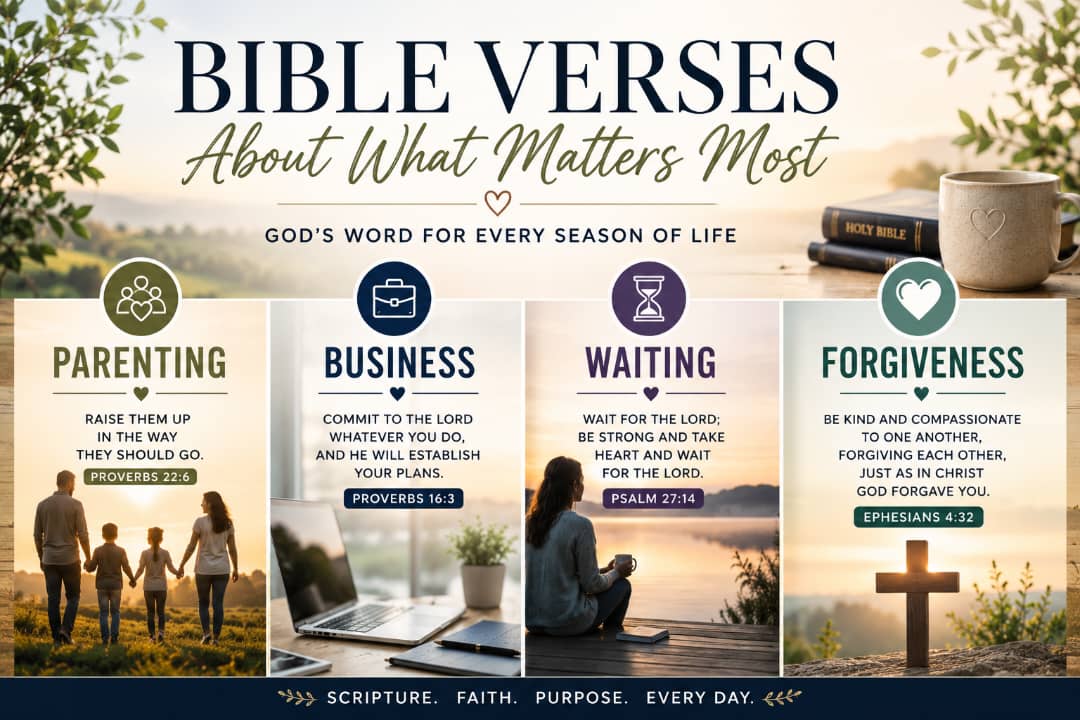
BIBLE VERSES ABOUT WHAT MATTERS MOST
Parenting • Business • Waiting • Forgiveness Bible verses about what matters most; speak into every season of life. The Bible is not just a book of history; it’s a living, breathing guide for every situation you will ever face. The Bible is not just a book of history; it is a living, breathing guide for every situation you will ever face. Whether you are raising children, building a business, waiting on God in a difficult season, or struggling to forgive someone who has hurt you deeply, God has already spoken to your situation through His Word. This article brings together the most powerful Bible verses on four topics that touch every believer’s life: parenting, business, waiting on God, and forgiveness. Each section includes the scripture, an explanation of what it means for you today, and practical takeaways to apply to your everyday walk with God. https://www.bing.com/ck/a?!&&p=24f646c248e92d8a987c686e83104ce565e61d2501663a5654bad0b5f23d2780JmltdHM9MTc4Mjc3NzYwMA&ptn=3&ver=2&hsh=4&fclid=2366de9e-d8c2-672b-1ff2-cbe9d9766668&psq=bible+verses+for+every+seasons+of+life&u=a1aHR0cHM6Ly9iaWJsZXN0dWR5Zm9yeW91LmNvbS9iaWJsZS12ZXJzZXMtYWJvdXQtdGltZXMtYW5kLXNlYXNvbnMv Part 1: Bible Verses About Parenting What Does God Say About Raising Children? Parenting is one of the most important callings God places on a person’s life. Yet it is also one of the most challenging. In a world filled with competing voices, social media, peer pressure, and cultural trends, the Bible remains the most reliable guide for raising children who love God and walk in purpose. Whether you are a new parent, a single mother or father, or a grandparent raising grandchildren, God’s Word has specific promises and instructions that apply directly to your home. Here are the most powerful Bible verses on parenting: “Train up a child in the way he should go: and when he is old, he will not depart from it.” -Proverbs 22:6 (KJV) What This Means for You This is perhaps the most quoted parenting scripture in the Bible. The Hebrew word for ‘train’ (chanak) means to dedicate, to initiate, to set something on its right course. God is not calling you to force a specific career or personality on your child, He is calling you to point them toward Him, toward purpose, and toward godly character from the earliest age. The promise is remarkable; when they are grown, they will not depart from it. Even when your children go through seasons of rebellion, waywardness, or confusion the foundation you lay in Christ will not be wasted. It will resurface. It will hold. “And these words which I command you today shall be in your heart. You shall teach them diligently to your children.” -Deuteronomy 6:6-7 (NKJV) More Scriptures on Parenting Reference Scripture (KJV / NIV) Ephesians 6:4 Fathers, do not provoke your children to anger, but bring them up in the discipline and instruction of the Lord. Psalm 127:3 Children are a heritage from the Lord, offspring a reward from him. Colossians 3:21 Fathers, do not embitter your children, or they will become discouraged. Proverbs 29:17 Discipline your children, and they will give you peace; they will bring you the delights you desire. Isaiah 54:13 All your children shall be taught by the Lord, and great shall be the peace of your children. Practical truth: Christian parenting is not about perfection, it is about pointing your children consistently toward Jesus, creating a home culture of prayer and the Word, and trusting God to do the work that only He can do in their hearts. Part 2: Bible Verses About Business PSALM 23 LINE BY LINE BREAKDOWN: A COMPLETE GUIDE FOR NEW BELIEVERS-WALKING THROUGH EVERY VERSE OF THE SHEPHERD’S PSALM. https://pcainspires.com.ng/psalm-23-line-by-line-breakdown/ God’s Blueprint for Kingdom Business Many Christians wonder whether the Bible has anything practical to say about business, entrepreneurship, and career. The answer is a resounding yes. From Proverbs to the Gospels to the Epistles, God speaks directly to how we earn, spend, invest, manage, and grow what He places in our hands. God is not just interested in Sunday worship or your religious life, He is Lord over your Monday morning meetings, your business plans, your negotiations, and your financial decisions. These Bible verses for business will anchor your professional life in God’s wisdom and principles. “Commit your works to the Lord, and your thoughts will be established.” -Proverbs 16:3 (NKJV) What This Means for You The word ‘commit’ in Hebrew literally means to roll. David uses this same picture in Psalm 37:5. The idea is to roll the weight of your business, your plans, strategies, goals, and uncertainties – entirely onto the Lord. When you do, He promises to establish your thoughts. Your ideas become aligned with heaven’s wisdom, and your steps are ordered by God rather than driven by panic or pride. This verse is not a passive instruction. It calls for active trust, making God the CEO of your business life in practical, daily ways; bringing Him into your planning, seeking His direction before major decisions, and operating with honesty and integrity as non-negotiable foundations. “The blessing of the Lord makes one rich, and He adds no sorrow with it.” -Proverbs 10:22 (NKJV) More Scriptures on Business & Work Reference Scripture (KJV / NIV) Proverbs 13:11 Wealth gained hastily will dwindle, but whoever gathers little by little will increase it. Deuteronomy 8:18 Remember the Lord your God, for it is he who gives you the ability to produce wealth. Proverbs 22:29 Do you see someone skilled in their work? They will serve before kings; they will not serve before officials of low rank. Colossians 3:23 Whatever you do, work at it with all your heart, as working for the Lord, not for human masters. Luke 16:10 Whoever can be trusted with very little can also be trusted with much. Proverbs 11:14 Where there is no guidance, a people fall, but in an abundance of counselors there is safety. Kingdom business principle: Your business is not only a vehicle for income- it is a platform for God’s glory. When you operate with integrity, serve people excellently, and manage resources wisely, your business becomes a testimony of what God can do through a yielded, faithful steward. PHILIPPIANS 4:13 EXPLAINED: WHAT IT REALLY MEANS
PSALM 23 LINE BY LINE BREAKDOWN
A Complete Guide for New Believers Psalms 23 line by line breakdown; one of the most beloved passages in the entire Bible, this short but powerful psalm has brought comfort, strength, and hope to millions of believers across thousands of years. It is written by King David, this short but powerful psalm has brought comfort, strength, and hope to millions of believers across thousands of years. If you are a new believer trying to understand the Bible, this Psalm 23 line by line breakdown is the perfect place to start. https://www.bing.com/ck/a?!&&p=ed306620fa7b13ccfc362855d304d50089634be494f08889f23f85df06a34a36JmltdHM9MTc4Mjc3NzYwMA&ptn=3&ver=2&hsh=4&fclid=2366de9e-d8c2-672b-1ff2-cbe9d9766668&psq=PSALMS+23&u=a1aHR0cHM6Ly93d3cuYmlibGVnYXRld2F5LmNvbS9wYXNzYWdlLz9zZWFyY2g9UHNhbG0lMjAyMyZ2ZXJzaW9uPUtKVg In this article, we will walk through every verse of Psalm 23, explain its meaning in simple language, provide historical and spiritual context, and show you how each line applies to your life as a Christian today. Whether you are new to the faith or looking for a fresh encounter with God’s Word, this guide is for you. Who Wrote Psalm 23 and Why Does It Matter? Psalm 23 was written by King David, the shepherd boy who became the greatest king of Israel. Before he wore a crown, David spent his youth watching over sheep in the hills of Bethlehem. This personal experience gave him a deep, intimate understanding of what it means to be a shepherd and more importantly to be a sheep in need of guidance. This background is important because David was not writing about something abstract. He was drawing from his own real-life experience of trusting God through loneliness, danger, and uncertainty. The psalm is categorized as a “psalm of trust” and is found in the Book of Psalms, the longest book in the Bible, which serves as the ancient hymnbook of Israel. For new believers, Psalm 23 is significant because it captures the entire Christian journey in just six verses: the peace of God’s provision, the courage He gives in darkness, the abundance of His grace, and the promise of dwelling with Him forever. It is short enough to memorize but deep enough to spend a lifetime studying. PHILIPPIANS 4:13 EXPLAINED: WHAT IT REALLY MEANS TO DO ALL THINGS THROUGH CHRIST WHO STRENGTHENS YOU. https://pcainspires.com.ng/bible-study-series-philippians-413/ Verse 1: The Lord is my shepherd; I shall not want. (Psalm 23:1, KJV) Line-by-Line Meaning The very first line of Psalm 23 makes a bold declaration: David calls God his shepherd. In ancient Near Eastern culture, a shepherd was not merely someone who kept animals. A shepherd was a protector, provider, guide, and even a friend to the flock. The role carried enormous responsibility and deep personal attachment. When David says “The Lord is my shepherd,” he is making this deeply personal. He does not say “the Lord is a shepherd” or “the Lord is our shepherd.” He says MY shepherd. This word- my- is an invitation for you as a new believer to make the same declaration. God is not a distant, impersonal force. He is your shepherd, specifically and personally. “I shall not want” means that because God is your shepherd, you will not lack anything you truly need. This does not mean life will be without difficulty, but it means your Good Shepherd will ensure that every genuine need of your soul, your spirit, and your life is met according to His perfect wisdom and timing. Prayer for the Believer Lord, I declare that You are my shepherd. You know me by name. You see every need I carry today. Teach me to trust that because You are leading me, I will lack nothing that truly matters. Amen. Verse 2: He maketh me to lie down in green pastures: he leadeth me beside the still waters. (Psalm 23:2, KJV) Context: What Are Green Pastures? In the arid landscape of ancient Israel, green pastures were not automatic. They required a skilled shepherd who knew where to lead the flock. Sheep are creatures of anxiety; they will not lie down unless they feel completely safe. The fact that God makes David lie down in green pastures tells us two important things about God’s character. First, God provides rest. In a world that rewards busyness and glorifies exhaustion, God deliberately leads His people to places of refreshment and rest. He understands that you cannot be spiritually fruitful when you are spiritually depleted. As a new believer, God is not asking you to constantly strive, He is asking you to trust Him enough to rest. BIBLE VERSES FOR ANXIETY: WHAT GOD SAYS WHEN FEAR AND WORRY THREATEN YOUR PEACE. https://pcainspires.com.ng/5-bible-verses-for-anxiety/ Second, God provides peace. “Still waters” in Hebrew is literally “waters of rest” or “waters of quietness.” Sheep would not drink from turbulent, rushing water- it frightened them. A good shepherd would find calm pools where the flock could drink safely. God does not overwhelm you with His presence. He leads you gently to still places where your soul can be refreshed. For the new believer, this verse is a reminder that quiet time with God in prayer and Bible study is not a religious duty- it is God’s invitation to come and be restored. Verse 3: He restoreth my soul: he leadeth me in the paths of righteousness for his name’s sake. (Psalm 23:3, KJV) The word “restoreth” in Hebrew is “shub”- it means to turn back, to return, to bring back to the original state. David knew, from his own painful experience, what it felt like to wander from God. After his sin with Bathsheba and many failures as king, David understood that restoration was not something he could achieve on his own. When God restores your soul, He is doing something miraculous. He is healing your broken places, reviving your weary spirit, and bringing you back into fellowship with Himself. As a new believer, you may have come to faith carrying years of wounds, mistakes, or shame. This verse promises that God does not just save you- He restores you. “He leadeth me in the paths of righteousness for his name’s sake” means God guides you in the right direction not because you deserve
5 BIBLE VERSES FOR ANXIETY
Deep Explanations & Heartfelt Prayers for every heart that is anxious, worried, and searching for peace 5 Bible Verses for Anxiety. “Do not be anxious about anything, but in every situation, by prayer and petition, with thanksgiving, present your requests to God.” -Philippians 4:6 (NIV) 5 BIBLE VERSES FOR ANXIETY; When Anxiety Feels Overwhelming: What God’s Word Says https://www.bing.com/ck/a?!&&p=197dba2beb8f63a3b2a4f55646a0ab690fdb39671281b4e99da8a2b593799b7dJmltdHM9MTc4Mjc3NzYwMA&ptn=3&ver=2&hsh=4&fclid=2366de9e-d8c2-672b-1ff2-cbe9d9766668&psq=BIBLE+VERSES+FOR+ANXIETY&u=a1aHR0cHM6Ly93d3cuYmlibGVzdHVkeXRvb2xzLmNvbS90b3BpY2FsLXZlcnNlcy93b3JyeS1hbmQtYW54aWV0eS1iaWJsZS12ZXJzZXMv Anxiety is one of the most universal human experiences. It does not discriminate by age, background, education, or even faith. Millions of people wake up with a knot in their stomach, a racing heart, and a mind that refuses to be still. Worry about finances, health, relationships, the future, and a thousand other things presses in on every side. But here is the remarkable truth: the Bible speaks directly and powerfully to the anxious heart. Long before the age of social media, the men and women of Scripture faced fear, uncertainty, grief, and overwhelming pressure and they found in God, a peace that truly defies natural explanation. This blog post is for every believer who has ever whispered, “Lord, I’m scared. I’m overwhelmed. I don’t know how to stop worrying.” We are going to walk through five of the most powerful Bible verses for anxiety, unpack what each verse truly means, explore its context, and then pray a specific, heartfelt prayer drawn straight from its truth. By the time you finish reading, our prayer is that you will not only have Scripture in your head but peace in your heart. God has not promised a life without anxiety-inducing situations. He has promised to be present and sufficient within every single step of challenges- yes, all one of them. How to Use This Guide BIBLE STUDY SERIES https://pcainspires.com.ng/bible-study-series-philippians-413/ You can read this guide in one sitting as a devotional study, or work through one verse per day across five days. For each verse, you will find: •The verse in full (NIV unless noted) •Historical and biblical context •A deep, practical explanation for today •A personal prayer drawn from the verse 5 BIBLE VERSES FOR ANXIETY; THE FIRST SCRIPTURE The Command to Cast Every Care – Philippians 4:6 -7 “Do not be anxious about anything, but in every situation, by prayer and petition, with thanksgiving, present your requests to God. And the peace of God, which transcends all understanding, will guard your hearts and your minds in Christ Jesus.” Philippians 4:6 – 7 (NIV) Context: Written from a Prison Cell These words were written by the Apostle Paul while under Roman house arrest, awaiting a trial before Emperor Nero that could result in his execution. If anyone had a ‘valid reason’ to be consumed by anxiety, it was Paul. Yet from those chains, he writes not with desperation but with an almost supernatural calmness, and he commands the same for his readers. The word translated ‘anxious’ here is the Greek ‘merimnaō’ to be pulled apart, to be divided in mind. Paul is describing the fractured, scattered mental state that anxiety produces: the inability to think clearly, to be present, to rest. His antidote is not denial of difficulty. It is prayer, specific, thankful, persistent prayer, directed to a God who hears and responds. 5 BIBLE VERSES FOR ANXIETY; What This Means for You Today Notice that Paul does not say ‘do not feel anxious.’ Anxiety is a feeling, and feelings arise involuntarily. He says ‘do not be anxious’ meaning, do not allow anxiety to be your posture, your permanent dwelling place. The antidote he prescribes is specific: turn the worry into a prayer. Whatever you are tempted to worry about, bring it to God instead. Name it. Ask specifically. And add thanksgiving, gratitude for what God has already done, as the soil in which new trust can grow. The promise that follows is extraordinary; not just that God will answer, but that His peace ‘a peace that human logic cannot explain or manufacture’ will stand guard over your heart and mind like a sentinel. This is military language: God’s peace is assigned to protect you from the very inside. HOW TO BUILD A STRONG PRAYER LIFE: THE ULTIMATE GUIDE FOR DEEPER FAITH https://pcainspires.com.ng/how-to-build-a-strong-prayer-life-the-ultimate-guide-for-deeper-faith/ The word ‘guard’ (Greek: phroureō) means to stand as a military sentinel, keeping watch. God’s peace does not just visit you, it is stationed at the gate of your heart, on active duty, refusing to let anxiety take up permanent residence. Key Note Anxiety says: ‘Everything depends on me figuring this out.’ Philippians 4:6 says: ‘Bring it to God. He is already working. His peace will hold you together while He does.’ A PRAYER FROM THIS VERSE Father, today I bring You every anxious thought by name. I bring the worry about [name your situation] and I choose, right now, to lay it at Your feet. I thank You that You are already at work in what concerns me. I thank You for every time You have kept me before today. Lord, release Your peace into my heart right now the peace that my mind cannot manufacture on its own. Stand guard over my thoughts. Protect my heart from the lies anxiety tells about my future. In Jesus’ name, Amen. THE SECOND SCRIPTURE 15 POWERFUL BIBLE VERSES FOR STRENGTH IN DIFFICULT TIMES https://pcainspires.com.ng/15-powerful-bible-verses-for-strength-in-difficult-times/ The Promise That Erases Fear – Isaiah 41:10 “So do not fear, for I am with you; do not be dismayed, for I am your God. I will strengthen you and help you; I will uphold you with my righteous right hand.” Isaiah 41:10 (NIV) Context: God Speaking Personally to a Frightened People Isaiah 41:10 was spoken by God to the nation of Israel during a period of existential threat, a people surrounded by hostile empires, facing the very real possibility of destruction. The verse is structured as four divine declarations, each one building on the last; God’s presence, God’s identity, God’s action, and God’s sustaining power. What is remarkable is the intimacy of the language. ‘I am your God.’ Not ‘a’ God. Not ‘the’ God